
Galactomannan from Aspergillus fumigatus formulated in human serum to be used as an unassayed external control, in assays based on galactomannan antigen from Aspergillus fumigatus detection to validate and control sample processing and analysis.
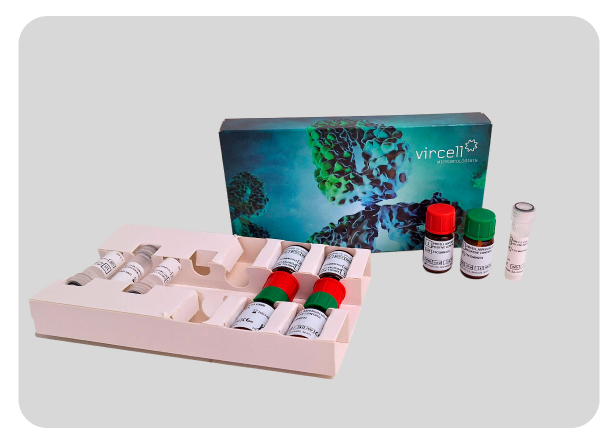
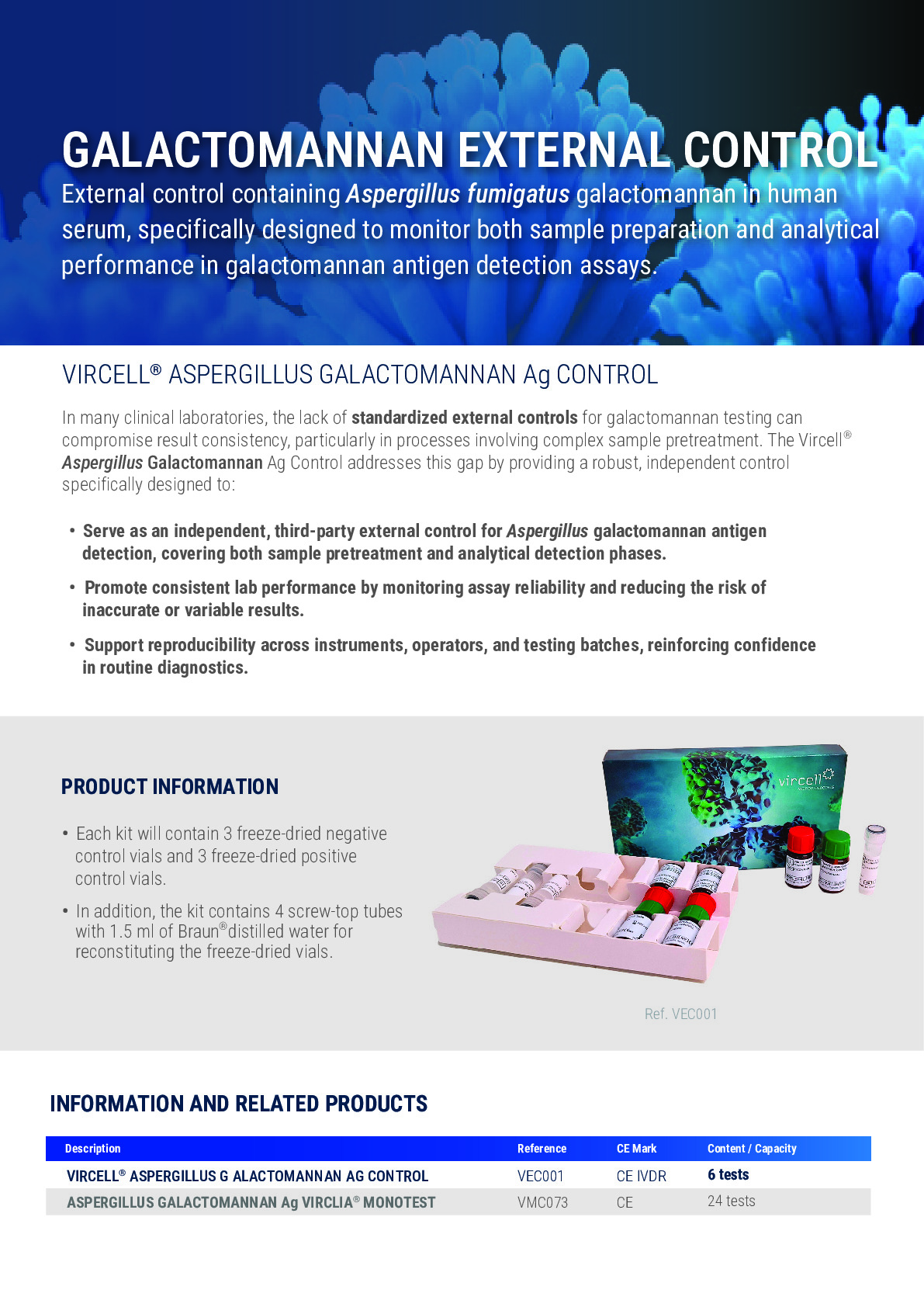
- Each kit will contain 3 freeze-dried negative control vials and 3 freeze-dried positive control vials.
- In addition, the kit contains 4 screw-top tubes with 1.5 ml of Braun distilled water for reconstituting the freeze-dried vials.
PRODUCTS
VIRCELL® ASPERGILLUS GALACTOMANNAN AG CONTROL
Analytes: Aspergillus
MORE RESOURCES

Related germs and organisms categorized for this product line.

Downloadable PDF materials, brochures, and technical documents.

The latest insights, news, and research articles from our scientific team.

H. pylori stool antigen testing: when the test works, but the workflow no longer does
Helicobacter pylori stool antigen testing is an established non-invasive approach for detecting active H. pylori infection. Validated monoclonal stool...

Polymicrobial Vaginal Infections: why third-party controls matter in molecular testing
Understanding the complexity of vaginal infectionsVaginal infections are among the most frequent reasons for gynecological consultation, but their dia...

Beyond detection: H. pylori testing in today’s laboratory workflow
Helicobacter pylori remains a highly relevant target in gastrointestinal diagnostics. It is a familiar pathogen, but its clinical importance has not d...