
The importance of negative matrices
In molecular diagnostics, accuracy is not only about detecting positives but also about confidently confirming negatives. Undetected contamination, matrix effects, or improper samples can compromise even the most robust workflows.
That is why negative controls are essential. They verify assay specificity, detect contamination or cross-reactivity, and effectively validate the entire workflow, from extraction to amplification.

Información de producto
Vircell’s AMPLIRUN® Negative Matrices are designed to provide reliable, ready-to-use solutions that strengthen your molecular testing quality:
- Broadly pre-screened
Tested against a wide panel of microorganisms (up to 33 viruses, bacteria and fungi tested) to ensure a true negative background. - Real clinical matrix that mimics human specimens for realistic validation.
- Lyophilized to save costs in logistics and reduce variability.
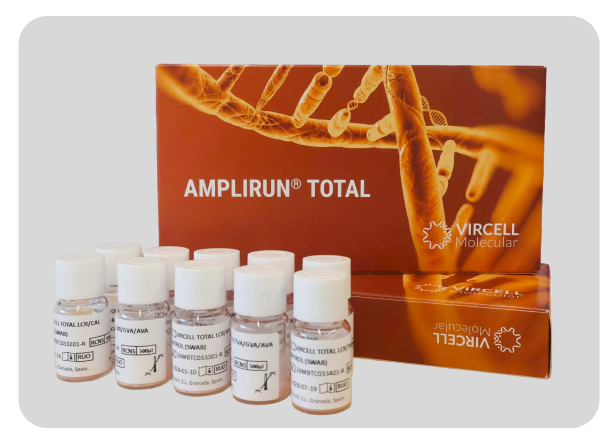
PRODUCTS
RESPIRATORY SWAB MATRIX NEGATIVE CONTROL
SPUTUM NEGATIVE CONTROL
STOOL MATRIX NEGATIVE CONTROL
MORE RESOURCES

The latest insights, news, and research articles from our scientific team.

Measles in the Americas in 2026: strengthening laboratory diagnosis amid rising cases
Measles is once again a major public health concern across the Americas.After years of progress towards elimination, measles has made a significant co...

H. pylori stool antigen testing: when the test works, but the workflow no longer does
Helicobacter pylori stool antigen testing is an established non-invasive approach for detecting active H. pylori infection. Validated monoclonal stool...

Polymicrobial Vaginal Infections: why third-party controls matter in molecular testing
Understanding the complexity of vaginal infectionsVaginal infections are among the most frequent reasons for gynecological consultation, but their dia...

Scientific bibliography and references related to this product.