
Background
Genital ulcers can be caused by various bacterial and viral pathogens with overlapping clinical presentations. Multiplex nucleic acid assays enable these aetiologies to be distinguished using lesion samples; it is therefore important to independently verify the extraction, amplification and detection of all relevant targets within the workflow.
AMPLIRUN® TOTAL GENITAL ULCER CONTROL (SWAB) provides an external control comprising seven targets in a matrix similar to a clinical sample, to support the validation and monitoring of RT-PCR workflows used in the investigation of genital ulcers.

Product Information
Control panel comprising Chlamydia trachomatis serovar L (CT-LGV), herpes simplex virus type 1 (HSV-1), herpes simplex virus type 2 (HSV-2), Treponema pallidum (TPA), Haemophilus ducreyi (HDU), mpox virus (MPXV) and varicella-zoster virus (VZV).
- A multi-organism panel with seven targets relevant to genital ulcers.
- Inactivated material formulated in a matrix that simulates a human genital ulcer swab sample, enabling the process to be controlled from extraction through to amplification and detection.
- Material quantified per batch using real-time PCR; the concentration is included in the certificate of analysis.
- Single-dose format and lyophilised form, for greater stability and without the need for a cold chain during transport.
- Designed for use with commonly used open RT-PCR platforms. Compatibility with each assay must be verified by the user prior to routine use.
- Non-infectious material.

PRODUCTS
AMPLIRUN® TOTAL GENITAL ULCER CONTROL (SWAB)
Analytes: Chlamydia trachomatis, Haemophilus ducreyi, Herpes simplex virus, Mpox virus, Varicella-Zoster virus
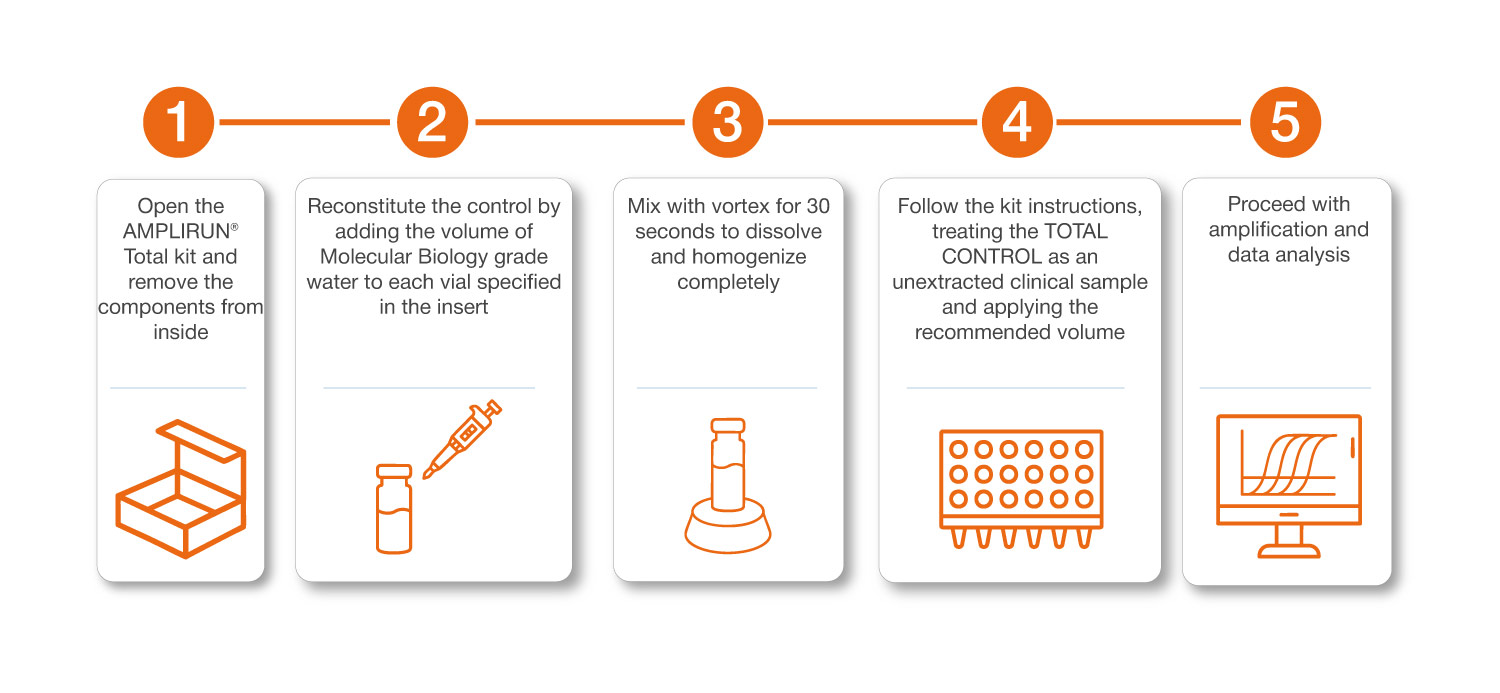
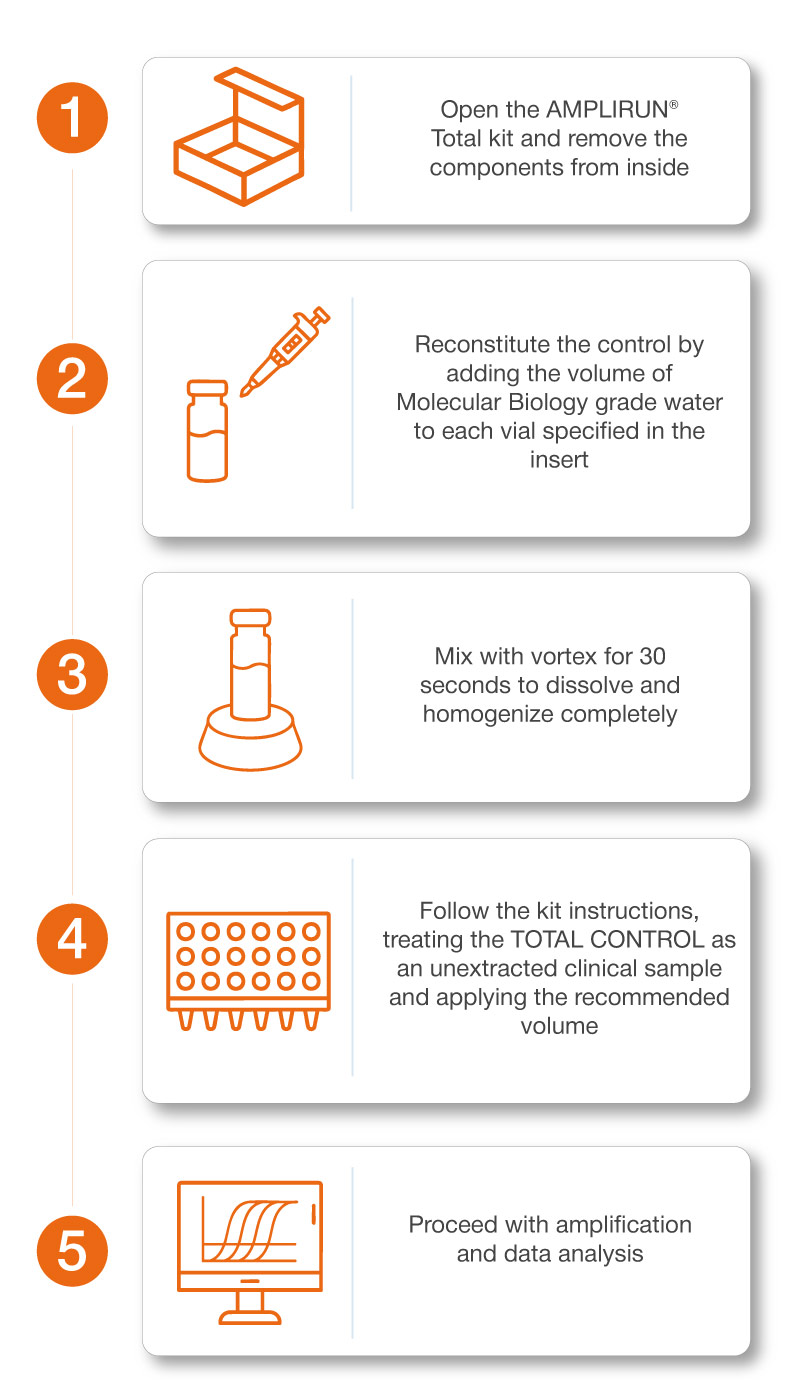
HOW IT WORKS
MORE RESOURCES

Related germs and organisms categorized for this product line.

Downloadable PDF materials, brochures, and technical documents.


The latest insights, news, and research articles from our scientific team.

H. pylori stool antigen testing: when the test works, but the workflow no longer does
Helicobacter pylori stool antigen testing is an established non-invasive approach for detecting active H. pylori infection. Validated monoclonal stool...

Polymicrobial Vaginal Infections: why third-party controls matter in molecular testing
Understanding the complexity of vaginal infectionsVaginal infections are among the most frequent reasons for gynecological consultation, but their dia...

Beyond detection: H. pylori testing in today’s laboratory workflow
Helicobacter pylori remains a highly relevant target in gastrointestinal diagnostics. It is a familiar pathogen, but its clinical importance has not d...