Product features

  • Purified complete microbial genome
  • Any sequence can be amplified
  • Concentration range: 12.500-20.000 copies/µl determined by qPCR
  • Can be used in any molecular testing platform
  • Non infectious
  • Lyophilized presentation
  • A resuspension vial is provided within the kit with Molecular Biology Grade Water

> Further information available for the design of primers and probes: RHINOVIRUS
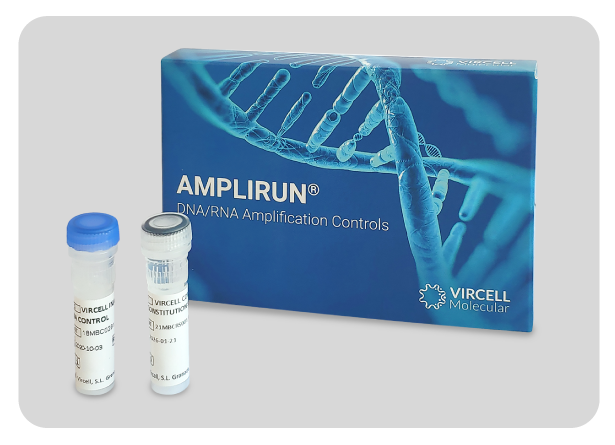
Kit AMPLIRUN

PRODUCTS

AMPLIRUN® RHINOVIRUS RNA CONTROL

CE0123 IVDR
Purified RNA of rhinovirus to be used to control techniques based in nucleic acids amplification.

Analytes: Rhinovirus

Reference MBC091
Concentración 12,500-20,000 copies/µl
Volume 50 µl

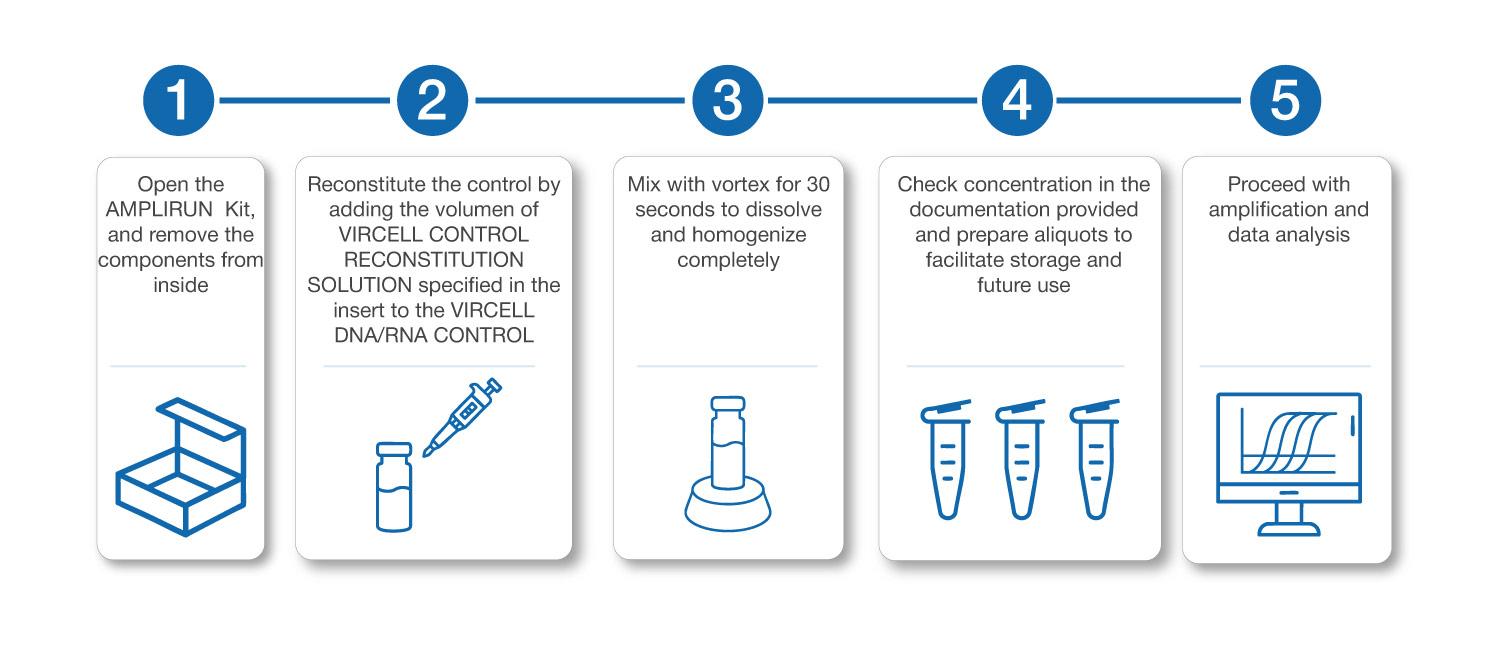
HOW IT WORKS

AMPLIRUN how to use vertical

MORE RESOURCES

Virus/Bacterias
RELATED VIRUSES/BACTERIA

Related germs and organisms categorized for this product line.

Flyers
FLYERS

Downloadable PDF materials, brochures, and technical documents.

Blog
BLOG

The latest insights, news, and research articles from our scientific team.

H. pylori stool antigen testing: when the test works, but the workflow no longer does
21 September 2026

H. pylori stool antigen testing: when the test works, but the workflow no longer does

Helicobacter pylori stool antigen testing is an established non-invasive approach for detecting active H. pylori infection. Validated monoclonal stool...

Polymicrobial Vaginal Infections: why third-party controls matter in molecular testing
10 August 2026

Polymicrobial Vaginal Infections: why third-party controls matter in molecular testing

Understanding the complexity of vaginal infectionsVaginal infections are among the most frequent reasons for gynecological consultation, but their dia...

Beyond detection: H. pylori testing in today’s laboratory workflow
31 July 2026

Beyond detection: H. pylori testing in today’s laboratory workflow

Helicobacter pylori remains a highly relevant target in gastrointestinal diagnostics. It is a familiar pathogen, but its clinical importance has not d...

Bibliography
BIBLIOGRAPHY

Scientific bibliography and references related to this product.

Anastopoulou Z, Fokas R, Koukouvini KA, Chatziantoniou A, Vantarakis A. Comparative Investigation and Trends of Respiratory Viruses Using Wastewater-Based Epidemiological Surveillance in Patras, Greece. Food Environ Virol 18, 10 (2026).
Berastegui J, Aguilar-Guisado M, Crespo Rivas JC. Usefulness of sputum for the identification of the viral aetiology in adults with community-acquired pneumonia. 30th ECCMID 2020 3059. Abstract 6411.
Boršová K, Paul ED, Kováčová V, Belák A, Bencová K, Vinař T, et al. Surveillance of SARS-CoV-2 lineage B.1.1.7 in Slovakia using a novel, multiplexed RT-qPCR assay. Sci Rep. 2021;11(1):20494.
Broeders S, Garlant L, Fraiture MA, Vandermassen E, Suin V, Vanhomwegen J, et al. A new multiplex RT-qPCR method for the simultaneous detection and discrimination of Zika and chikungunya viruses. International Journal of Infectious Diseases. 2020 Mar 1;92
Jeong E, Kang M, Yun SA, Kim TY, Huh HJ. Evaluation of the STANDARD M10 Flu/RSV/SARS-CoV-2 Fast assay for the detection of influenza A/B viruses, respiratory syncytial virus, and SARS-CoV-2 in nasopharyngeal swab specimens. Microbiol Spectr. 2026 Mar 3;14