



Measles is once again a major public health concern across the Americas.
After years of progress towards elimination, measles has made a significant comeback across the Americas in 2025 and 2026. Persistent vaccination gaps, growing numbers of susceptible people, and ongoing transmission in several countries are allowing the virus to spread again.
According to the latest data from the Pan American Health Organization (PAHO), 55,792 confirmed measles cases and 77 deaths were reported in 17 countries and territories between 4 January and 3 October 2026. This represents a 4.8-fold increase compared with the same period in 2025. Guatemala has reported the most cases, followed by Mexico, the United States, Peru, and Canada.
The regional public health risk remains classified as “Very High”.
Rapid laboratory diagnosis is central to confirming suspected measles cases and supporting outbreak investigation, surveillance and public health response. RT-PCR and measles serology provide complementary information, and their value depends on the timing and type of sample collected.
What is driving the measles resurgence in the Americas?
The current resurgence did not happen overnight.
In 2025, PAHO recorded 14,891 confirmed measles cases and 29 deaths across 13 countries, representing a 32-fold increase compared with the previous year. Transmission then accelerated further during 2026.
Several factors are contributing to this resurgence.
One of the most important is the accumulation of susceptible populations due to gaps in measles vaccination coverage. PAHO reports that only 33% of countries in the Region achieved at least 95% coverage with the first dose of measles-containing vaccine, while only 20% reached that level for the second dose.
At the same time, vaccine hesitancy, operational challenges in immunization programs, population mobility and growing global circulation of measles are increasing the likelihood of both imported cases and onward transmission.
Some populations are particularly vulnerable, including young children under five, indigenous communities, migrants and people with limited access to healthcare and vaccination services.
Together, these factors create the conditions for an imported measles case to trigger sustained transmission.
How is measles diagnosed in the laboratory?
Laboratory confirmation of suspected measles cases relies mainly on molecular and serological testing, with RT-PCR used to detect measles virus RNA and serology used to detect measles-specific antibodies.
The characteristic combination of fever, cough, coryza, conjunctivitis, and maculopapular rash can strongly suggest measles, but early clinical presentations may overlap with other febrile rash illnesses.
This can be particularly challenging in countries where measles has circulated at very low levels for years and clinicians rarely encounter the disease in routine practice.
Because clinical presentation alone may not be conclusive, laboratory confirmation plays a central role in evaluating suspected measles cases.
Public health guidance recommends collecting samples for both molecular and serological testing when measles is suspected. The most informative approach depends on the timing of sample collection and the specimen available.
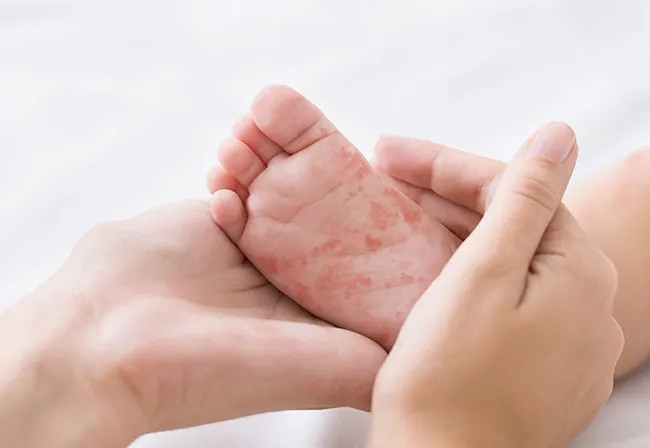
Measles RT-PCR vs serology: how does the diagnostic window change?
RT-PCR and serology are complementary because they detect different markers at different stages of measles infection.
RT-PCR is particularly useful early in infection and is most informative when respiratory samples are collected as soon as possible after measles is suspected, particularly during the first days after rash onset.
Serology becomes increasingly informative as the antibody response develops.
Measles-specific IgM antibodies usually develop during the first days after rash onset, but they may still be undetectable very early in infection. CDC guidance notes that an IgM result obtained within the first 72 hours after rash onset may therefore be negative despite infection. Although IgG antibodies are mainly used to assess immunity from previous infection or vaccination, paired serum samples showing a rise in IgG levels over time can provide additional evidence of a recent measles infection when IgM results are inconclusive.
Taken together, molecular and serological testing can provide complementary evidence across the measles diagnostic window.
In a suspected case, the diagnostic question is therefore not simply “Which test should be used?”, but also:
When was the sample collected, which specimen is available and what information is required?
Laboratory testing capacity during measles outbreaks
As case numbers rise, laboratory needs change too.
The challenge is no longer simply confirming an isolated suspected case. Laboratories may suddenly need to handle fluctuating testing volumes, support surveillance programs and provide results quickly enough to inform public health decisions.
A reliable measles testing workflow therefore needs to deliver strong performance while also offering the flexibility, traceability and controls required in routine laboratory practice.
The current situation in the Americas highlights the importance of having access to both molecular and serological measles testing capabilities.
Vircell supports measles laboratory diagnosis through complementary molecular and serological solutions for different testing needs and workflows.
Measles RT-PCR testing with VIRPLEX Measles
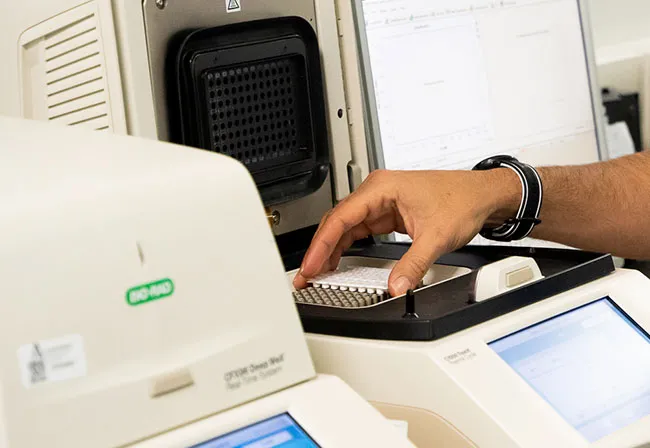
VIRPLEX Measles is an RT-PCR solution for the qualitative detection of measles virus RNA in human saliva and nasopharyngeal swab samples.
The assay targets the N and H genes of measles virus and includes external positive and negative controls, an exogenous MS2 internal control, and an endogenous RNase P control to assess sample quality.
Its pre-dispensed lyophilized reagents are designed to facilitate integration into routine RT-PCR workflows.
For laboratories supporting suspected-case investigation and outbreak surveillance, VIRPLEX Measles provides a molecular approach for detecting measles virus RNA during the early phase of infection, when RT-PCR is most informative.
Measles IgM and IgG serology with VirClia® Monotest
Vircell also provides automated measles serology through MEASLES VIRCLIA® IgM and IgG MONOTEST assays.
The assays use chemiluminescent immunoassay technology and are supplied in a ready-to-use Monotest format, allowing individual samples to be processed without batch accumulation.
MEASLES VIRCLIA® IgM MONOTEST detects IgM antibodies in serum or plasma, while MEASLES VIRCLIA® IgG MONOTEST detects IgG antibodies in serum, plasma, and cerebrospinal fluid according to its intended use.
Both are processed on VirClia® Lotus, Vircell's automated CLIA platform for infectious disease serology, supporting random access and continuous loading.
Explore MEASLES VIRCLIA® IgM and IgG MONOTEST
The single-test format is particularly useful when measles testing volumes are unpredictable, allowing laboratories to process individual samples without waiting to build a batch, an important advantage when testing demand is driven by sporadic, imported, or outbreak-related cases.
Measles IgM and IgG testing with ELISA
For laboratories using established ELISA workflows, Vircell also offers MEASLES ELISA IgG/IgM, a flexible solution that enables IgG and/or IgM antibody detection in human serum and plasma using the same kit.
The 96-test format, with individual break-apart wells, supports both manual and automated ELISA workflows and allows laboratories to adapt testing to their routine sample volume.
Discover MEASLES ELISA IgG/IgM
Together, molecular RT-PCR, automated CLIA and ELISA provide laboratories with different options to support measles testing according to their workflow, sample volume and diagnostic context.
Measles control: vaccination, surveillance and laboratory diagnosis
Vaccination remains the cornerstone of measles prevention.
But when immunity gaps allow the virus to circulate, strong surveillance and reliable laboratory diagnosis become essential to identify cases and support a rapid public health response.
The resurgence across the Americas shows how quickly measles can return when susceptible populations accumulate.
For laboratories, preparedness means understanding how the diagnostic window changes throughout infection and having access to molecular and serological tools that can address different testing needs.
Early molecular detection, serological testing, and effective laboratory surveillance all play a role.
As countries across the Americas work to bring measles transmission back under control, reliable laboratory diagnosis will remain essential for confirming suspected cases, monitoring where the virus is circulating, and supporting efforts to interrupt transmission.


MORE PUBLICATIONS




DO YOU HAVE ANY QUESTIONS?
Contact us