


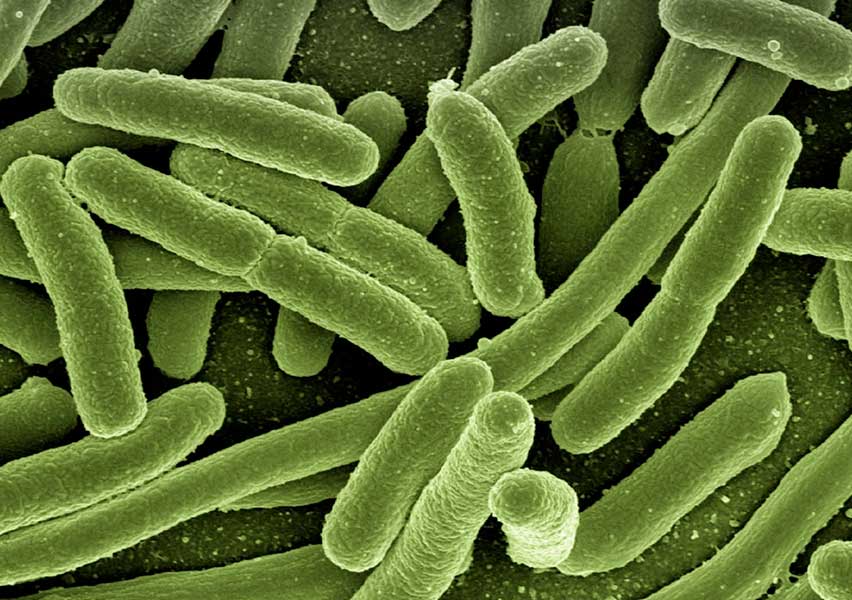
Escherichia coli is a facultative anaerobic Gram-negative bacillus that is a normal component of the human and animal intestinal microbiota. Although most strains of E. coli are harmless commensals, pathogenic variants have acquired specific virulence factors that enable them to cause both intestinal and extraintestinal diseases. Urinary tract infection (UTI) is the most common clinical manifestation, followed by gastrointestinal infections and, less frequently, invasive infections such as sepsis and neonatal meningitis.
Clinical features:
Escherichia coli can be divided into several pathogenic groups according to their virulence mechanisms and site of infection. The most common clinical presentation is ascending urinary tract infection, particularly in women, including cystitis, pyelonephritis and, occasionally, prostatitis or pelvic inflammatory disease. In newborns, E. coli is one of the leading causes of bacteraemia and meningitis, particularly the K1 strain, which has a polysaccharide capsule that enables it to evade phagocytosis and complement activity, facilitating invasion of the central nervous system.
Several intestinal strains of E. coli are responsible for diarrhoeal diseases:
Enterotoxigenic Escherichia coli (ETEC): This strain is a common cause of traveller’s diarrhoea and childhood diarrhoea in low-income countries. It produces heat-labile (LT) and/or heat-stable (ST) toxins that disrupt the intestinal fluid and electrolyte balance by activating adenylate cyclase or guanylate cyclase enzymes, increasing cyclic AMP or GMP levels. The result is watery diarrhoea, accompanied by vomiting and rarely fever, without morphological damage to the mucosa or significant inflammation.
Enteroinvasive Escherichia coli (EIEC): These strains invade and destroy the colonic epithelium in a manner similar to Shigella spp., causing inflammatory diarrhoea that may be watery or bloody and accompanied by fever. They possess the ial gene and are capable of intracellular spread.
Enteropathogenic Escherichia coli (EPEC): This is an important cause of childhood diarrhoea in developing countries. It adheres to intestinal cells through a type III secretion system encoded by the bfpA locus, causing elongation of the microvilli and reorganisation of the cytoskeleton. This results in prolonged, non-bloody diarrhoea accompanied by fever and a mild inflammatory response.
Enteroaggregative Escherichia coli (EAEC): These strains adhere to intestinal cells in a characteristic “stacked-brick” pattern without invading the cells or altering their morphology. However, they produce ST-like toxins that functionally alter intestinal cells, causing persistent diarrhoea, particularly in malnourished children, immunocompromised individuals (such as patients with HIV/AIDS) and people living in tropical regions.
Extraintestinal E. coli infections can occur when the anatomical barriers of the intestine are disrupted, for example by ischaemia, inflammatory bowel disease, diverticulitis or trauma, allowing bacterial translocation into the bloodstream or adjacent structures. This can cause peritonitis, hepatobiliary, skin or pulmonary infections, or even bacteraemia without an identifiable source.
Diagnosis:
Diagnosis of E. coli infections is performed using culture or molecular testing of appropriate clinical specimens, such as urine, blood or stool. In cases where enterohaemorrhagic strains are suspected, for example O157:H7, the laboratory should be informed because these strains require special culture media. Molecular tests can identify characteristic virulence genes such as lt, st, ial and bfpA.
Treatment:
Empirical treatment depends on the site and severity of the infection and should be adjusted according to antimicrobial susceptibility testing. Many strains are resistant to ampicillin and tetracyclines, while resistance to trimethoprim-sulfamethoxazole (TMP/SMX) and fluoroquinolones is becoming increasingly common. Therapeutic options include combinations of β-lactams with β-lactamase inhibitors, cephalosporins, aminoglycosides, carbapenems, nitrofurantoin, fosfomycin and newer antibiotics such as cefiderocol and eravacycline.
Infections caused by extended-spectrum β-lactamase (ESBL)-producing strains represent a therapeutic challenge and often require carbapenems or newer β-lactam/β-lactamase inhibitor combinations. Fosfomycin is a useful oral alternative for lower urinary tract infections caused by multidrug-resistant strains.
It is important to note that antibiotic treatment is contraindicated in infections caused by enterohaemorrhagic E. coli (EHEC) because of the risk of increasing Shiga toxin release, which may lead to haemolytic uraemic syndrome (HUS).