


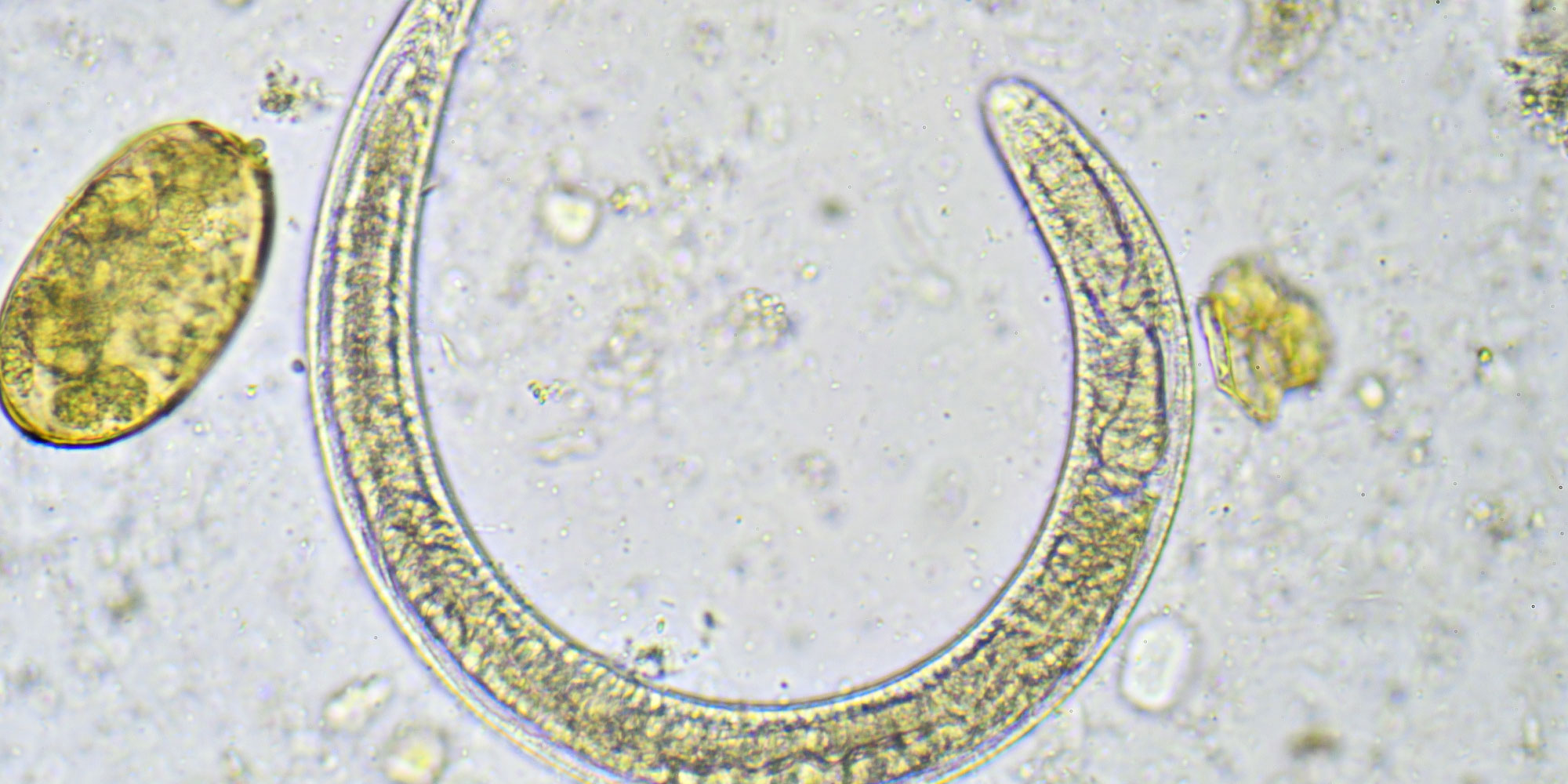
Why Strongyloides diagnosis matters
Strongyloides stercoralis is a soil-transmitted intestinal nematode found predominantly in tropical and subtropical regions. Infection occurs when infective larvae penetrate the skin, usually following contact with contaminated soil.
Strongyloidiasis remains an important health concern in endemic areas and among people with a history of travel or migration from these regions. The World Health Organization (WHO) also highlights that the disease is frequently underdiagnosed due to asymptomatic infections and limitations in the sensitivity of available diagnostic methods.
Unlike most intestinal helminths, S. stercoralis can complete an autoinfection cycle within the human host. As a result, untreated infection can persist for decades and potentially for life.
Many patients remain asymptomatic or develop non-specific gastrointestinal, respiratory or skin symptoms. Eosinophilia can provide a useful clue, but it is not diagnostic on its own.
A major clinical concern is the risk of hyperinfection or disseminated strongyloidiasis in patients receiving corticosteroids or other immunosuppressive treatments. These complications can be life-threatening, making the identification of possible infection particularly important before immunosuppressive therapy in people with a relevant history of exposure. The WHO specifically highlights the risk of Strongyloides hyperinfection associated with corticosteroid treatment.
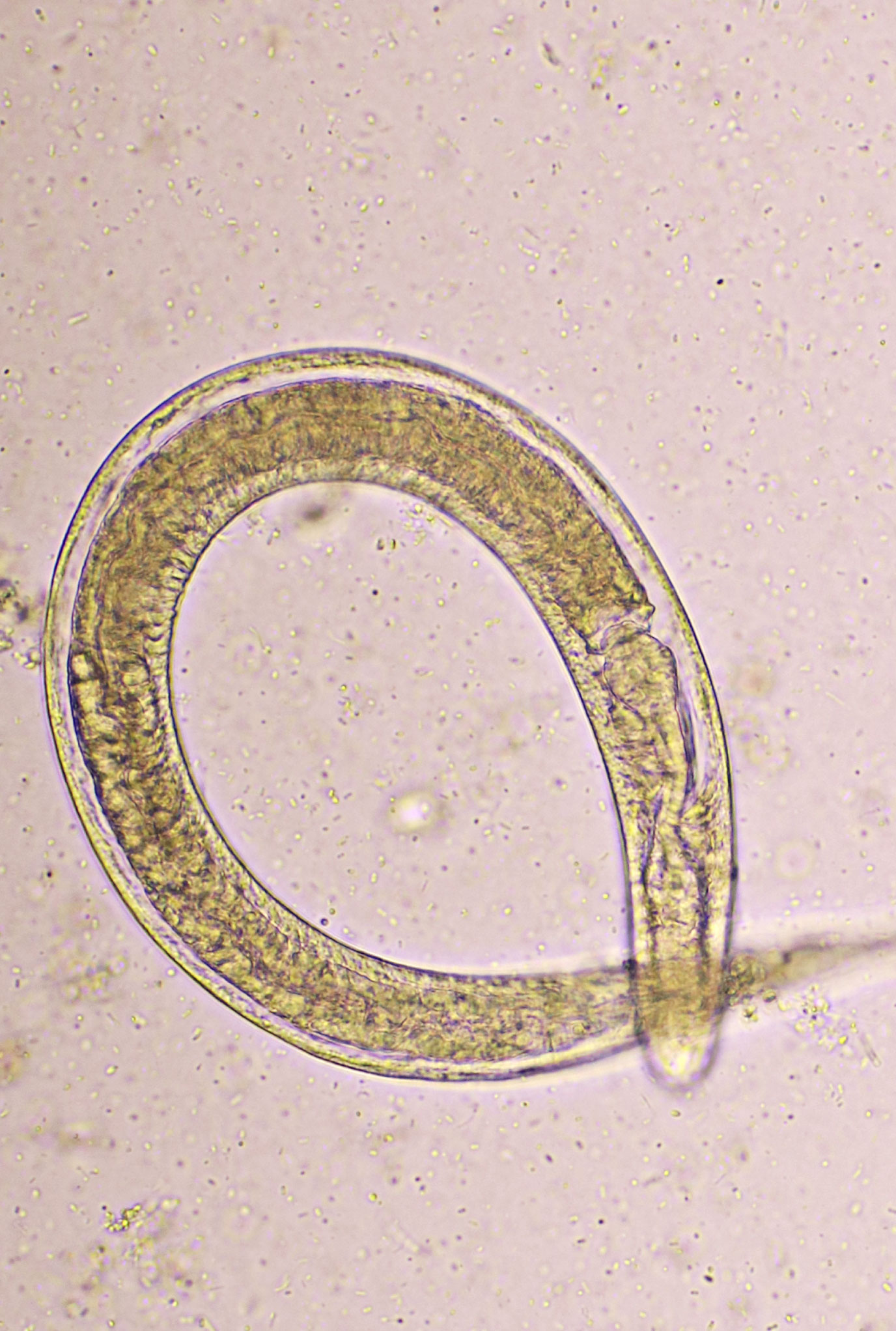
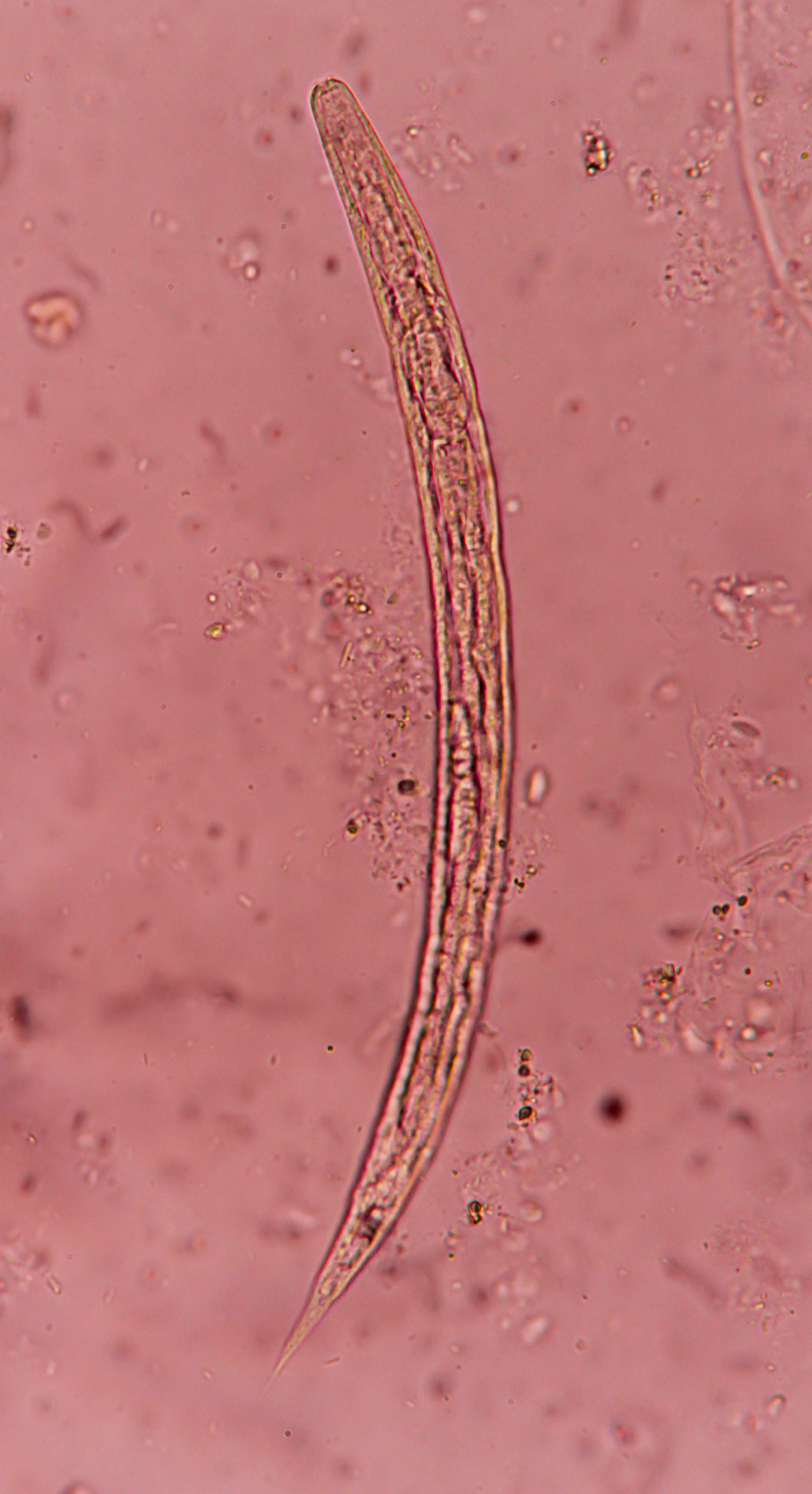
Diagnostic methods and challenges in strongyloidiasis
Strongyloidiasis diagnosis combines epidemiological risk, clinical assessment and laboratory testing.
The main direct detection methods include:
- Conventional stool microscopy
- Baermann concentration
- Agar plate culture
- Stool PCR
However, S. stercoralis larvae may be shed intermittently and in low numbers, particularly in low-intensity chronic infections. For this reason, a negative stool examination does not reliably exclude infection.
Strongyloides stercoralis serology can therefore play an important role in non-endemic clinical settings, particularly in patients with previous exposure and in screening before immunosuppressive treatment.
Depending on the clinical context, Strongyloides IgG antibody testing may be used alone or in combination with sensitive stool-based methods.
Available assays can differ in antigen composition, technology and clinical performance. In addition, the absence of a perfect reference standard for strongyloidiasis diagnosis makes direct comparison between methods more challenging.
Results must be interpreted carefully. Antibodies may not yet be detectable early in infection or in some immunocompromised patients, and cross-reactivity with other helminths can occur.
A positive IgG result against Strongyloides stercoralis supports the diagnostic assessment but does not, on its own, confirm active infection.
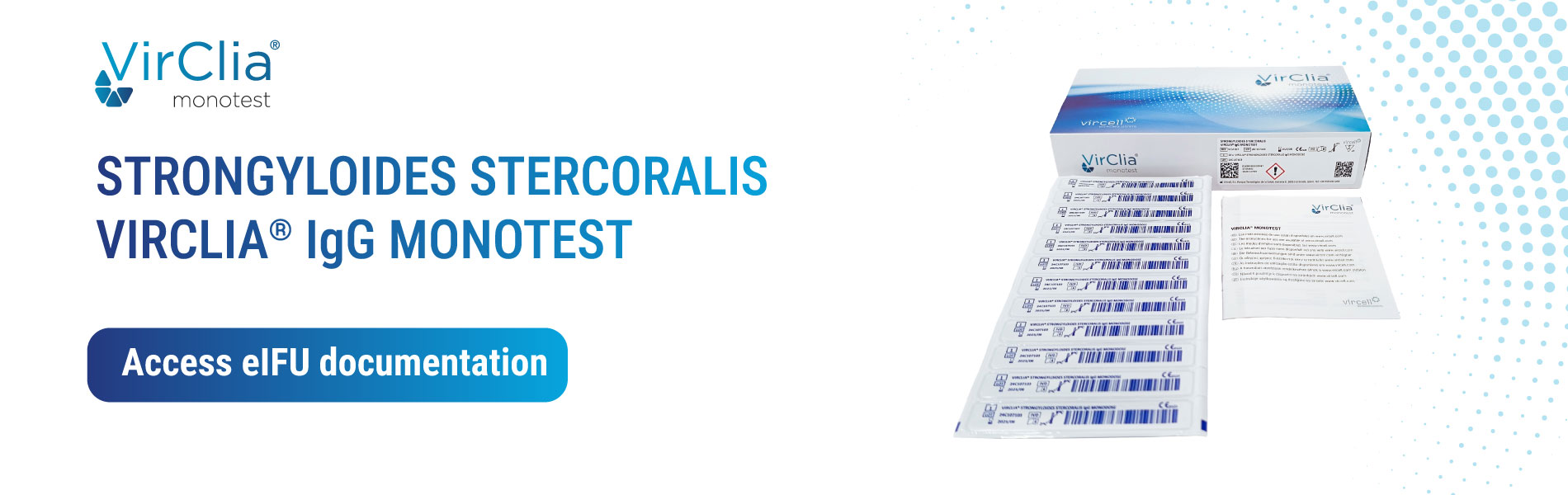
STRONGYLOIDES STERCORALIS VIRCLIA® IgG MONOTEST | VCM107
STRONGYLOIDES STERCORALIS VIRCLIA® IgG MONOTEST is an automated qualitative chemiluminescent immunoassay (CLIA) for the detection of IgG antibodies against Strongyloides stercoralis in human serum or plasma.
The assay is intended as an aid to diagnosis in individuals with suspected S. stercoralis infection or exposure.
Its individual MONOTEST format enables on-demand testing, without the need to wait until enough samples have accumulated to build an ELISA batch.
The assay is compatible with the automated VIRCLIA® LOTUS processor, supporting the integration of Strongyloides serology into the laboratory's routine workflow.
Key benefits of STRONGYLOIDES STERCORALIS VIRCLIA® IgG MONOTEST
On-demand testing

Individual sample processing without batching, allowing laboratories to run each sample when it is needed.
Automated CLIA processing
Automated processing on VIRCLIA® LOTUS, reducing manual intervention and supporting integration into the laboratory workflow.
Built-in assay controls
Each monodose includes a blank well and calibrator, supporting non-specific background correction and assay validation.
Objective results in approximately 2 hours
The antibody index classifies results as negative, equivocal or positive, with an approximately 2-hour turnaround time reported in an independent evaluation.
Performance supported by clinical evidence
The assay has been evaluated in published independent clinical studies in two non-endemic settings, providing additional evidence of its diagnostic performance.
Summary performance

* In Roose et al., 245 samples were submitted for testing and 244 produced a result. CI = confidence interval; CrI = Bayesian credible interval.
† In Schuurman et al., specificity was 98.1% when equivocal control results were treated as negative; it was 96.7% when equivocal results were counted as false positives.
The IFU also reports a PPV of 89% and an NPV of 97% against the comparator ELISA. Predictive values depend on pre-test probability and the population being evaluated.
Summary performance
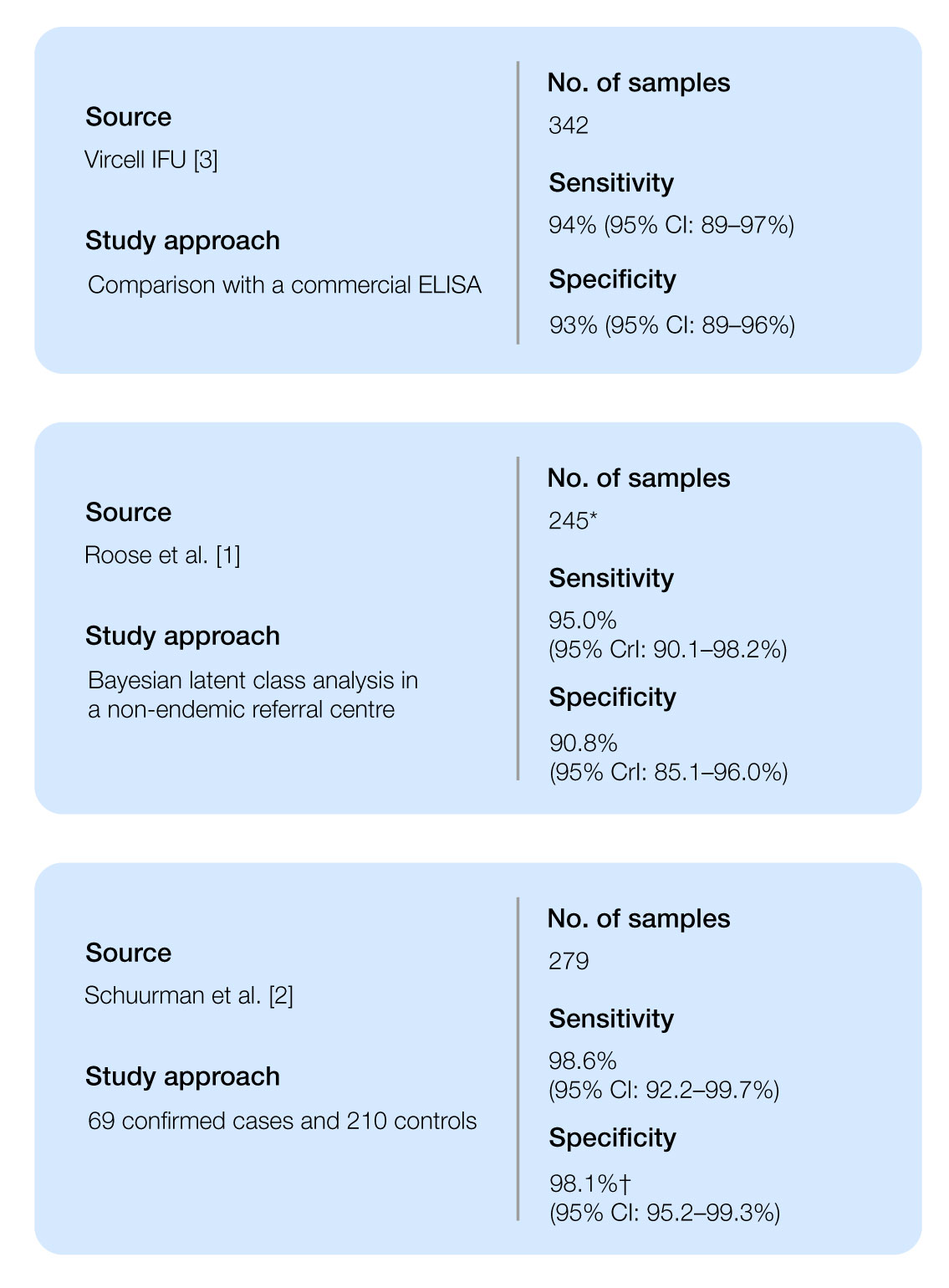
* In Roose et al., 245 samples were submitted for testing and 244 produced a result. CI = confidence interval; CrI = Bayesian credible interval.
† In Schuurman et al., specificity was 98.1% when equivocal control results were treated as negative; it was 96.7% when equivocal results were counted as false positives.
The IFU also reports a PPV of 89% and an NPV of 97% against the comparator ELISA. Predictive values depend on pre-test probability and the population being evaluated.
Bibliography

Diagnostic Accuracy of a Novel Chemiluminescent Immunoassay for Strongyloides stercoralis in a Non-Endemic Clinical Setting
Ir a enlace
Evaluation of the Strongyloides stercoralis VirClia IgG monotest for the diagnosis of strongyloidiasis in a diverse clinical cohort.
Ir a enlaceReferences and product documentation
- Roose S, Sanfilippo L, Tais S, et al. Diagnostic Accuracy of a Novel Chemiluminescent Immunoassay for Strongyloides stercoralis in a Non-Endemic Clinical Setting. Diagnostics. 2026;16(19):3227. doi:10.3390/diagnostics16193227
- Schuurman AR, Slavenburg S, Hodiamont C, et al. Evaluation of the Strongyloides stercoralis VirClia IgG monotest for the diagnosis of strongyloidiasis in a diverse clinical cohort. Journal of Clinical Microbiology. 2026. doi:10.1128/jcm.01053-26
- Vircell. STRONGYLOIDES STERCORALIS VIRCLIA® IgG MONOTEST. Instructions for Use (VCM107), L-VCM107-EN-02; December 17, 2025.
Promotional material

Need support with Strongyloides stercoralis diagnosis?
Vircell offers automated, on-demand IgG serology to support strongyloidiasis diagnosis, providing laboratories with a flexible solution for the detection of antibodies against S. stercoralis.