
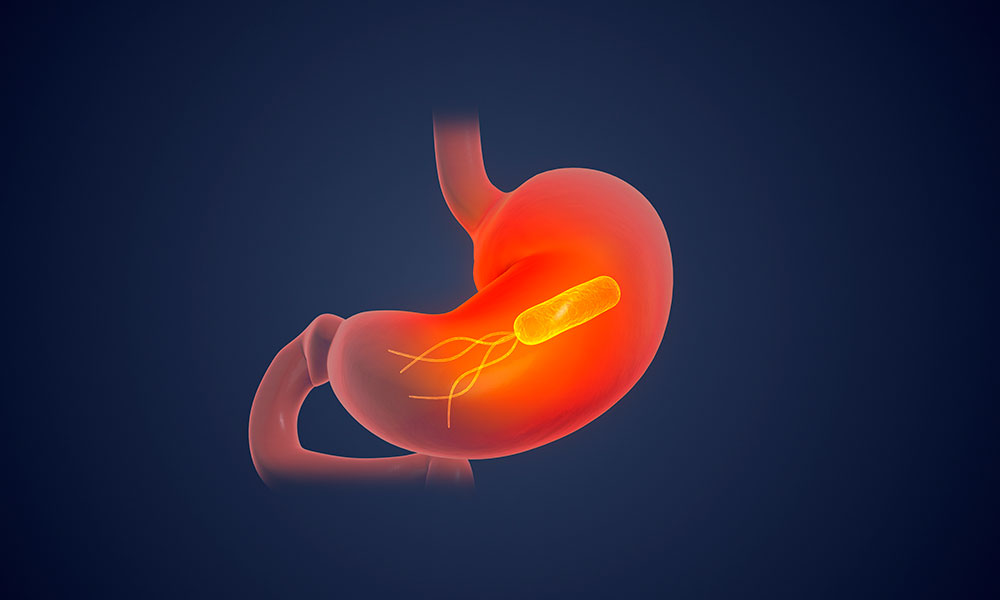
Helicobacter pylori: global prevalence and the growing role of stool antigen testing
Helicobacter pylori (H. pylori) remains one of the most common chronic bacterial infections worldwide. Current estimates suggest that around half of the global population (≈50%) is infected, although prevalence varies widely by region.
In many developing countries, infection rates can reach 60–80%. In more developed regions, rates are often lower, typically 30–50%. Even within the same country or city, differences can be seen between urban and rural populations or across socioeconomic groups.
Why H. pylori matters in clinical practice
High prevalence is not just a statistic. H. pylori is closely linked to:
- Chronic gastritis
- Peptic ulcer disease
- Gastric cancer risk
That clinical burden creates a clear need for diagnostic tools that are not only accurate, but also practical, scalable, and accessible, especially in settings where large numbers of patients need testing and follow-up.
Diagnostic approaches: invasive vs non-invasive testing
H. pylori can be detected using invasive or non-invasive methods. The choice often depends on the clinical scenario, available infrastructure, and the goal of testing (initial diagnosis vs confirmation of eradication).
Invasive methods
Invasive diagnosis typically involves endoscopy with gastric biopsy, followed by one or more of the following:
- Histology
- Culture
- Rapid urease testing
These approaches can provide valuable clinical information, but they require specialized procedures, trained staff, and appropriate facilities.
Non-invasive methods
In routine practice, non-invasive testing often plays the leading role, especially when the priority is to test more patients efficiently. Common non-invasive options include:
- Urea Breath Test (UBT)
- Serological testing
- Stool antigen testing
Why stool antigen testing is gaining relevance
Among non-invasive options, H. pylori stool antigen testing has become particularly important. It is:
- Non-invasive
- Suitable across age groups
- Compatible with broader screening and follow-up strategies
When performed according to clinical guidance, stool antigen testing can support:
- Initial diagnosis of active infection
- Post-treatment confirmation of eradication (test of cure)
As healthcare systems increasingly focus on early detection, appropriate antibiotic use, and treatment follow-up, stool antigen assays are becoming more relevant in routine clinical laboratory workflows—especially within gastrointestinal diagnostics.
What laboratories need: performance and workflow efficiency
In settings where H. pylori is common, laboratories need more than “a result.” Ideally, diagnostic solutions should combine:
Analytical performance
- High sensitivity and specificity
- Strong agreement with established methodologies
Operational efficiency
- Standardized pre-analytical workflows
- Reduced hands-on time
- Compatibility with automation and high-throughput routines
System integration
- Consistency across operators
- Robustness in real-world testing conditions
- Fit with automated platforms already present in the lab
This combination, performance + workflow, often determines whether an assay is truly scalable in modern clinical practice.
HELICOBACTER PYLORI Ag VIRCLIA® MONOTEST: CLIA-based stool antigen detection
With these needs in mind, HELICOBACTER PYLORI Ag VIRCLIA® MONOTEST was developed as a chemiluminescence immunoassay (CLIA) for the detection of H. pylori antigen in stool samples.
The goal is to support laboratories looking for a solution that fits real workflows—where standardization, efficiency, and platform compatibility matter.
Internal evaluation: diagnostic performance (retrospective)
VirClia® Monotest was assessed in an internal retrospective evaluation using 313 previously characterized stool samples. The evaluation examined relative sensitivity, relative specificity, and overall agreement compared with established reference methods.
Main results
- Relative sensitivity: 86–89%
- Relative specificity: 98%
- Overall agreement: >94%
Against a consensus result (built using multiple independent techniques, with VirClia® excluded to avoid bias), reported metrics were:
- Sensitivity: 91%
- Specificity: 98%
- Correlation: 96%
- ROC AUC: 0.970
- Cohen’s kappa: 0.906 (almost perfect agreement)
Overall, these findings reinforce the robustness and reliability of the assay in a real-world laboratory setting for stool antigen detection.
A key differentiator: simplified stool sample preparation
Analytical performance is essential, but workflow efficiency can be just as decisive in routine labs.
One distinctive feature of VirClia® Monotest is its integrated pre-analytical stool preparation system, which includes:
- A dedicated filtering device
- Pre-filled sample tubes
This design eliminates the need for centrifugation, an extra step commonly required in traditional stool workflows (including some ELISA or CLIA formats).
What this can mean for the lab
By simplifying the pre-analytical phase, laboratories can:
- Reduce hands-on time
- Increase standardization
- Limit variability between operators
- Improve operational efficiency
For many laboratories, reducing pre-analytical complexity is a practical way to improve reproducibility and throughput without compromising reliability.
Looking ahead: scalable non-invasive gastrointestinal diagnostics
H. pylori continues to place a significant burden across both developing and developed regions. As diagnostics evolve, non-invasive and scalable solutions will remain central to:
- Early detection strategies
- Responsible antibiotic use
- Follow-up testing after treatment
Stool antigen detection is now firmly established as a strategic tool for diagnosing and managing H. pylori infection. Going forward, solutions that combine strong diagnostic performance with more standardized, efficient workflows are likely to play an increasingly important role in gastrointestinal testing.
Explore Vircell’s portfolio and discover our full range of diagnostic solutions designed to support clinical laboratories across different testing needs.